
The five Thermo Ignite ingredients and the doses studied
Quick answer
The ingredients of Thermo Ignite are chromium picolinate, L-carnitine HCl, green tea extract, Gymnema sylvestre and African mango seed extract, though no amount is published for any of them. For reference, studies used 200 to 1,000 mcg of chromium, 1.8 to 4 grams of carnitine and 300 mg of African mango a day, with small effects.
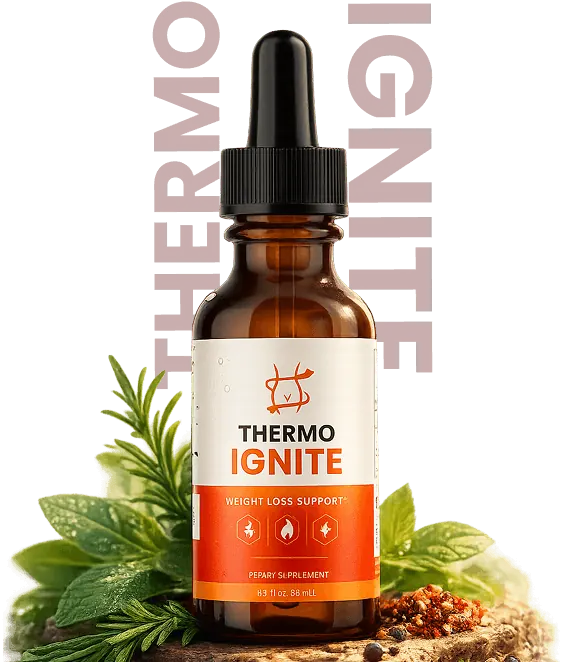
Thermo Ignite names five ingredients and prints no amount for any of them. This post sets each name against the daily dose human studies used, then lists what to ask the brand.
What does the Thermo Ignite bottle tell you about its formula?
The bottle tells you the name, the form and the size, but not the recipe. The front panel reads THERMO IGNITE, Weight Loss Support*, Dietary Supplement and 2 Fl Oz (59.14 mL). No Supplement Facts panel was supplied to us.
The five ingredient names come from the brand's graphic and sales pages. A US supplement normally lists each amount per serving in its Supplement Facts box, and that box is the piece we do not have.
- Form
- Liquid drops
- Bottle
- 2 fl oz (59.14 mL)
- Daily serving
- 2 mL (1 mL twice a day)
- Supply
- About 30 days
- Ingredient amounts
- Not published
- Liquid base and sweeteners
- Not published
Everything we could confirm about the label sits on the Thermo Ignite Supplement Facts page.
What doses did studies use for each ingredient?
Each ingredient has been tested on its own, usually as a capsule or tablet, at a known daily dose. The results below apply only at those doses and only to the single ingredient.
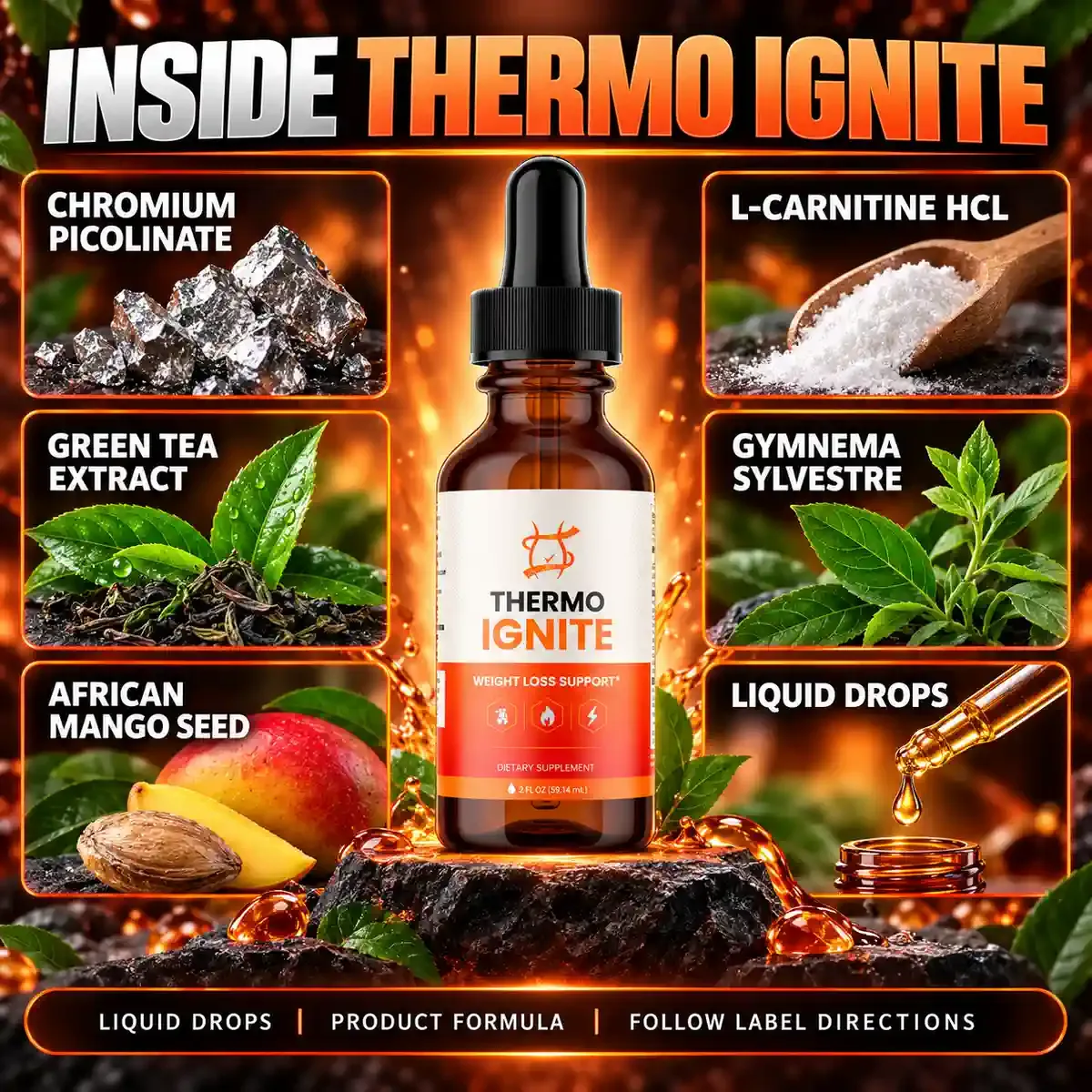
Chromium picolinate: 200 to 1,000 mcg a day
Weight trials gave 200 to 1,000 mcg of chromium a day for 8 to 24 weeks. Across 9 trials with 622 adults, people lost about 1.1 kg more than on placebo, and the evidence was rated low quality (Tian et al., 2013). A second review of 11 trials found 0.50 kg (Onakpoya et al., 2013 (chromium)).
For scale, the daily Adequate Intake for adults is only 20 to 35 mcg (NIH ODS, Chromium (health professional)). More on the chromium picolinate page.
L-carnitine: 1,800 to 4,000 mg a day
Carnitine trials used 1.8 to 4 grams a day. Across 9 trials with 911 adults, carnitine led to 1.33 kg more weight loss than control, but the effect got smaller the longer people took it (Pooyandjoo et al., 2016).
Only about 14% to 18% of supplemental L-carnitine is absorbed, and about 3 grams a day can cause nausea, cramps and a fishy body odor (NIH ODS, Carnitine (health professional)). See the L-carnitine page.
Green tea extract: about 141 to 1,207 mg catechins a day
Green tea studies gave preparations with about 141 to 1,207 mg of catechins a day for around 12 weeks. A Cochrane review of 18 studies with 1,945 people found a very small weight loss that was not statistically significant. Outside Japan the gap was 0.04 kg (Jurgens et al., 2012).
The green tea extract page covers the research in more detail.
Gymnema sylvestre: no clear weight dose
We found no weight trial with a clear Gymnema dose. LiverTox gives a typical product dose of 400 mg three times a day and notes only "mild weight loss" in one uncontrolled study (LiverTox, Gymnema).
A 14-day trial used 4 mg Gymnema mints three times a day. A mint taken before a chocolate test cut the chocolate people ate that day, but by day 15 there was no difference, and weight was not reported (Turner et al., 2022). Read the Gymnema page.
African mango seed: 300 mg a day
The best-known trial gave 150 mg of an extract called IGOB131 twice a day, or 300 mg a day, for 10 weeks (NIH ODS, Dietary Supplements for Weight Loss (health professional)). Three small trials with 208 people all reported weight loss, but none described proper randomization, and all came from one research group (Onakpoya et al., 2013 (African mango)).
Reviewers said it cannot be recommended until better trials exist. See the African mango page.
How does the Thermo Ignite label compare, ingredient by ingredient?
It cannot be compared, because every label amount is blank. Each full bar below is a studied dose; the stripes mark the missing label figure.
Label: not published. Studied: 200-1,000 mcg chromium a day. (Tian et al., 2013) (NIH ODS, Chromium (health professional))
Label: not published. Studied: 1,800-4,000 mg a day. (Pooyandjoo et al., 2016) (NIH ODS, Carnitine (health professional))
Label: not published. Studied: about 141-1,207 mg catechins a day. (Jurgens et al., 2012) (NIH ODS, Dietary Supplements for Weight Loss (health professional))
Label: not published. Studied: 400 mg a day (one older study). (LiverTox, Gymnema)
Label: not published. Studied: 300 mg extract a day (IGOB131). (NIH ODS, Dietary Supplements for Weight Loss (health professional)) (Onakpoya et al., 2013 (African mango))
| Ingredient | Studied daily amount | Trial length | Best result vs placebo | In Thermo Ignite |
|---|---|---|---|---|
| Chromium picolinate | 200-1,000 mcg | 8-24 weeks | About 0.5-1.1 kg | Not published |
| L-carnitine | 1,800-4,000 mg | 30-360 days | About 1.33 kg, shrinking over time | Not published |
| Green tea extract | About 141-1,207 mg catechins | About 12 weeks | Very small, not significant | Not published |
| Gymnema sylvestre | No clear weight dose | 14 days (cravings) | No weight result | Not published |
| African mango seed | 300 mg (IGOB131) | 4-10 weeks | Reported, but poor-quality trials | Not published |
Want to see the bottle for yourself? Thermo Ignite comes with a 60-day money-back guarantee.
6 bottles at $49 each, save $780. 60-day money-back guarantee · Free US shipping · Secure checkout.
Why do the missing amounts matter?
Without amounts, nobody can tell whether a serving holds a studied dose, a token sprinkle or more than is wise. Each result above holds only at the tested dose.
You cannot check the dose
The whole daily serving is 2 mL of liquid, less than half a teaspoon. Carnitine trials alone used 1.8 to 4 grams a day. Whether a serving that small holds anything close to that is a question only a label panel can answer.
Study results do not carry over by themselves
The FTC says studies on an ingredient may not support a product whose dose or formula differs from what was tested (FTC, Health Products Compliance Guidance). NIH also notes that products mixing several ingredients are hard to judge, because the effect of each one cannot be isolated (NIH ODS, Dietary Supplements for Weight Loss (health professional)).
Safety limits need numbers
Green tea extract has been linked to rare liver injury, and EFSA flagged 800 mg or more of EGCG a day from supplements (EFSA, green tea catechins safety, 2018). Thermo Ignite does not publish its EGCG or caffeine content, so you cannot tell how close a serving comes.
Value is hard to judge
At 2 mL a day, the packs work out to $1.63 to $2.63 a day. With no amounts, you cannot work out what you pay per milligram of anything.
How much does Thermo Ignite publish?
Thermo Ignite publishes half of the twelve facts we check on every supplement. The six it leaves out are the ones that would let you compare it with research.
6 of 12 key facts are published
- Product name and formPublished
- Bottle sizePublished
- Daily servingPublished
- Ingredient namesPublished
- Prices and packsPublished
- Guarantee windowPublished
- Amount of each ingredientNot published
- Other ingredients (base, sweetener)Not published
- Label cautionsNot published
- Manufacturer namedNot published
- Third-party lab reportNot published
- Study of this productNot published
What should you ask the brand before you buy?
Ask for the numbers that turn a list of names into a label you can check, and keep the answers in writing.
- How much of each ingredient is in 1 mL?
- How much elemental chromium does the chromium picolinate supply?
- How much EGCG and how much caffeine are in a 2 mL day?
- What is the liquid base, and are there sweeteners or preservatives?
- Who makes it, and is there a lab report for my lot?
- Which cautions are printed on the bottle?
The order desk at +1 (302) 200-3480 or [email protected] handles product and order questions. The website inbox, [email protected], cannot see orders.
Thermo Ignite ingredients vs research: FAQ
How much of each ingredient is in Thermo Ignite?
Not published. Thermo Ignite names five ingredients, but no Supplement Facts panel with amounts per mL was supplied, so no serving can be checked against research.
Can chromium picolinate lower blood sugar too much?
NIH says chromium may add to the blood-sugar-lowering effect of insulin and diabetes drugs. If you take one, ask your doctor before starting Thermo Ignite, whose chromium amount is not published.
How much L-carnitine should I take to lose weight?
Studies used 1.8 to 4 grams a day for 30 to 360 days, with about 1.33 kg more loss than control. About 3 grams a day can cause stomach upset and a fishy odor. Thermo Ignite's carnitine amount is not published.
Why are African mango studies considered weak?
The three trials were small, with 208 people in total. None described proper randomization or hidden allocation, and all came from one research group.
Does green tea extract help you lose weight?
Only a little, if at all. A Cochrane review of 18 studies found a very small, non-significant loss, and NCCIH says the science does not support green tea supplements for weight loss.
How much African mango extract should I take?
Trials used 300 to 3,150 mg a day, and the best-known one gave 300 mg of an extract called IGOB131. Those trials were small and poorly run, and Thermo Ignite's amount is not published.
What amount of each ingredient is in Thermo Ignite drops?
The amounts are not published, and no Supplement Facts panel was supplied. Without a panel, no serving of Thermo Ignite can be compared with the doses used in studies.
Why are African mango studies behind Thermo Ignite considered weak?
The studies behind African mango seed extract, one of the five Thermo Ignite ingredients, used about 300 mg a day and showed small effects at best, so the evidence is limited.
Page check
Written by
Writes and fact-checks every page against the bottle, the sales page and public health sources.
Medically reviewed by
Dr. Sriram Machineni, MD, Physician
Medical reviewer. Review date: October 11, 2026.
- Last checked October 6, 2026
- Facts from the bottle, the sales page and the sources cited above
- Found an error? Write to [email protected] or read how we check facts